
Why your mental health is an essential partner of your physical health
You naturally listen to your body: a stiff back prompts you to stretch, a heavy stomach encourages you to eat lighter, and fatigue sends you to bed earlier. You may have even established routines (physical activity, nutrition) to prevent the onset of discomfort or illness.
Yet, when it comes to signals from your mind, that same level of care often fades. Irritability, racing thoughts, feeling overwhelmed are signals we tend to minimize, push through, or hope will pass. In part, this is because building mental health habits and establishing preventative routines can feel like a luxury: something unnecessary, self-indulgent, or even a sign of weakness in the eyes of others.
Yet, it is the same vital mechanism of listening and care that we apply to our physical health. What if your mental health wasn’t just something to address in times of crisis, but a vital partner to your physical health, deserving of the same daily attention?
Two Pillars, One Foundation
Imagine a race car and its GPS.

Even with a perfect engine (your body), if the GPS (your mind) is unclear or overwhelmed, the car loses direction, circles endlessly, consumes too much fuel, and wears down prematurely.
On the other hand, a clear GPS is useless if the engine is failing. Neglecting one means compromising the whole.
Just as it is possible to prevent or reduce physical pain through good habits, it is possible to prevent or reduce psychological distress through mental hygiene.
What science tells us
The connection between mental health and physical health is real and measurable. Recent research confirms that chronic stress doesn’t just stay “in the head”: it affects your entire body.
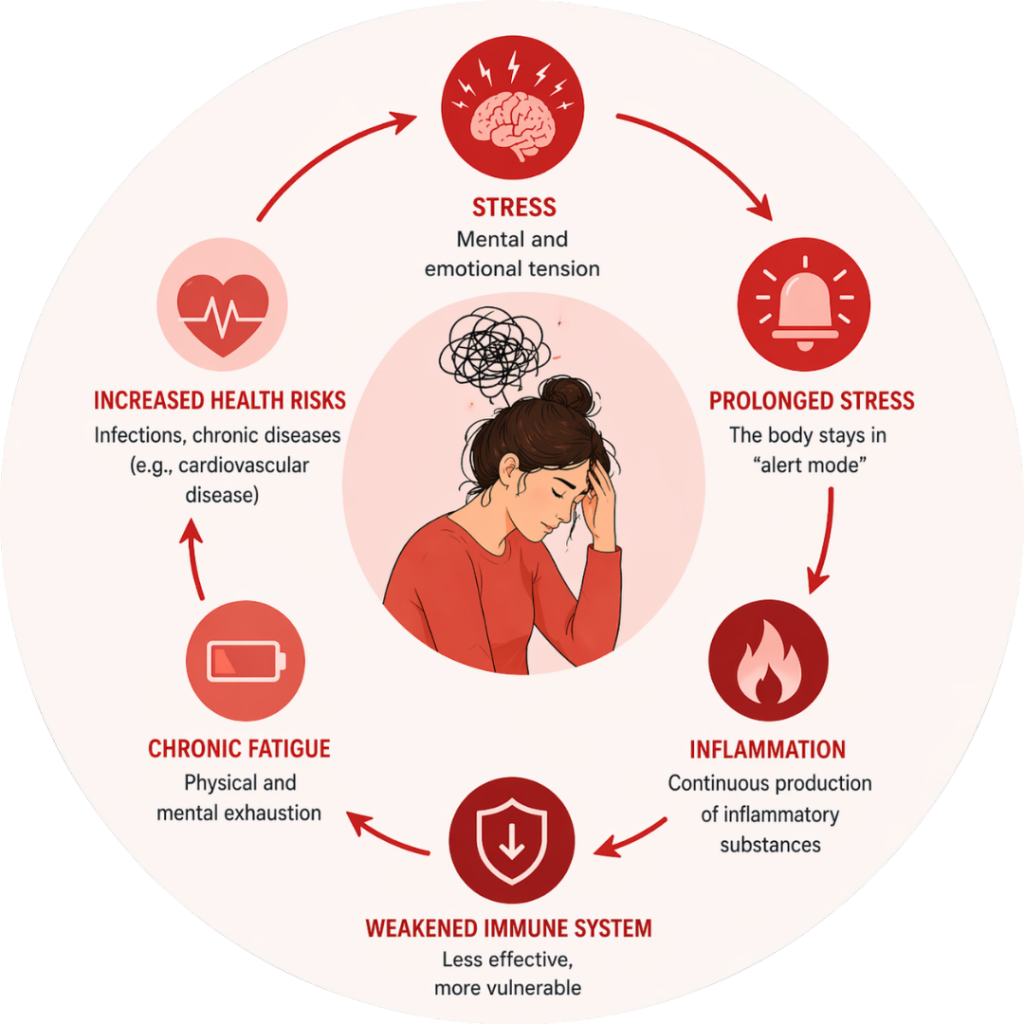
Specifically, prolonged stress triggers a constant biological alarm. Like a defense system stuck in “alert” mode, the body begins to continuously produce inflammatory substances. Over time, this low-grade inflammation weakens your immune system, making you more vulnerable to infections and increasing your risk of physical health conditions, including cardiovascular disease.
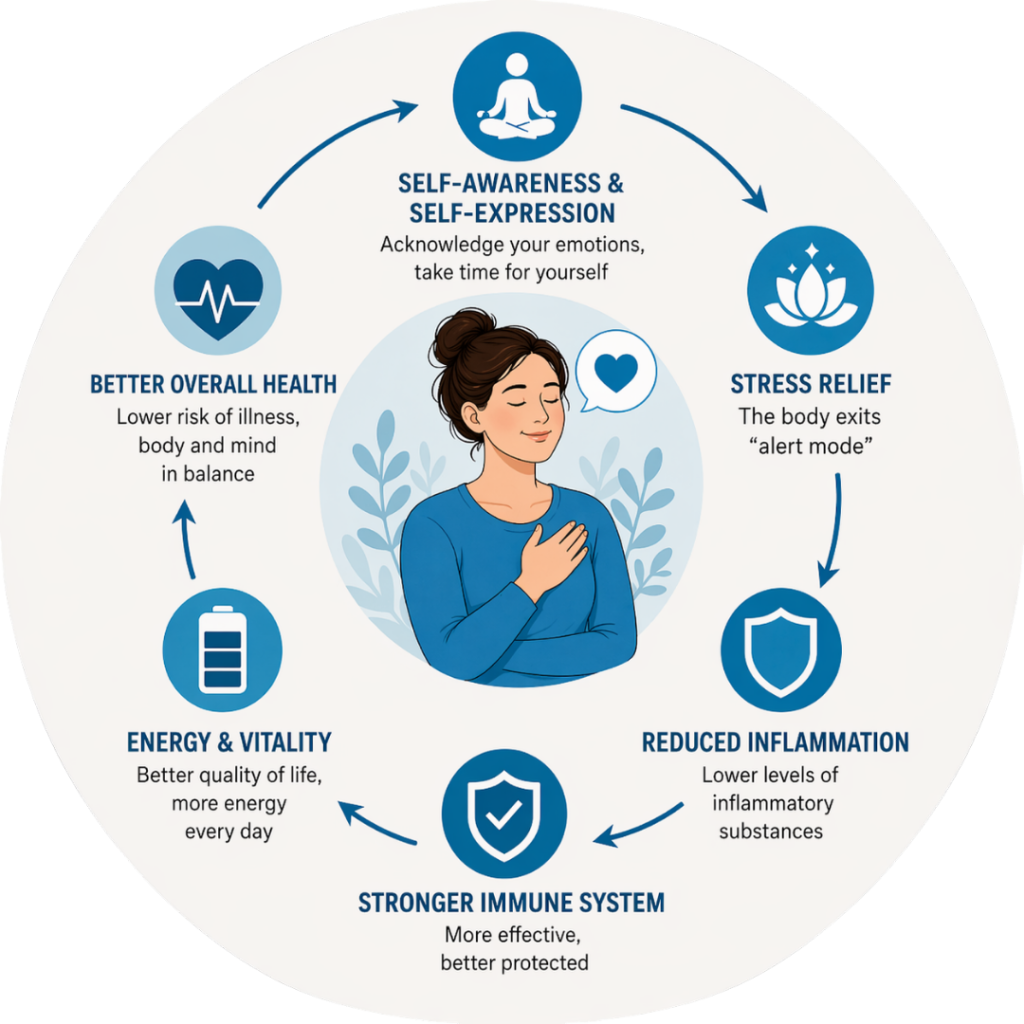
Taking care of your mind sends a real, calming signal to your body—helping it regulate, recover, and repair.
Taking care of your mental health, as important as exercise
We don’t judge someone for exercising to protect their heart, or eating well to support their body. Taking time for your mental well-being follows the same logic.
Taking care of your mind isn’t about waiting for a crisis. It’s about accepting the need to care for your emotions and needs daily. And that often starts with listening and self-expression.
Reclaiming power over your well-being
At Tel-Aide Montreal, listening is seen as a powerful tool for self-understanding, emotional regulation, and prevention. Talking helps you reflect, clarify your thoughts, feel heard, validated and regain balance. A conversation offers a space to navigate daily life with more lightness and clarity.
Contrary to common beliefs, talking isn’t about placing your burden on someone else. It’s about reconnecting with your own inner resources and making choices, freely and independently, about the direction of your life.
Your well-being, physical or mental, is a whole. It’s up to you to choose what feels good for you.
📞 1 877 935-1101 24/7 – toll-free – non-judgmental – with empathy

